Drywood vs. Subterranean Termites: Identification and Targeted Treatment Options
Learn how to tell drywood termites apart from subterranean termites, identify signs of damage, and select the right targeted treatment options for your property.
Understanding the Termite Threat in Southern California
Wood-destroying insects cause billions of dollars in structural damage across the United States each year. In Southern California, property owners face a dual threat: drywood termites and subterranean termites. While both species feed on cellulose found in structural lumber, their biology, nesting habits, and points of entry differ completely. Applying a subterranean termite solution to a drywood infestation—or vice versa—will fail to eliminate the problem and leave your home vulnerable to ongoing structural compromise.
Los Angeles homes are uniquely susceptible due to regional climate and construction styles. Warm summers and mild winters allow termite colonies to stay active year-round. From mid-century post-and-beam architecture in the hills to classic stucco bungalows across the basin, identifying which termite species is present represents the critical first step toward preserving structural integrity.
Drywood Termites: Biology and Behavior
Drywood termites (primarily Incisitermes minor in Western states) live entirely within the wood they consume. Unlike species that require constant contact with moist soil, drywood termites extract moisture directly from the wood fibers and atmospheric humidity. This biological adaptation allows them to establish colonies high above ground level.
A typical drywood colony begins when winged reproductive swarmers (alates) take flight during hot, calm afternoons in late summer and autumn. They land on roof fascia, eaves, exposed rafters, wooden shingles, or window frames, shed their wings, bore directly into the wood, and seal the entrance hole behind them. Because a single colony rarely exceeds a few thousand members, their damage develops more slowly than that of subterranean species, but multiple distinct colonies can inhabit the same building simultaneously.
Subterranean Termites: Biology and Behavior
Subterranean termites (notably Reticulitermes hesperus, the Western subterranean termite) nest underground. They depend on constant moisture from the earth to survive and will quickly desiccate and die if exposed to open, dry air. To feed on above-ground structural timber, subterranean termites maintain a direct, protected connection to their subterranean nest.
Subterranean colonies are significantly larger than drywood colonies, often housing hundreds of thousands to over a million individuals. Swarms typically emerge during warm spring days following periods of rain. Because of their sheer population density, subterranean termites can inflict severe structural damage in a fraction of the time required by drywood termites.
Key Differences in Identification
Accurate identification requires careful observation of physical evidence, wood damage patterns, and physical insect characteristics.
1. Evidence of Presence: Pellets vs. Mud Tubes
- Drywood Termites: The most definitive sign of a drywood infestation is fecal pellets, known as frass. Drywood termites push these tiny, hard, elongated pellets out of the wood through microscopic "kick-out holes." The pellets measure about one millimeter in length, have six distinct concave sides, and resemble fine sand or ground pepper piled beneath an infested timber.
- Subterranean Termites: Subterranean termites do not produce loose frass piles. Instead, they construct earthen shelter tubes—often called mud tubes—to bridge the gap between moist soil and structural wood. These pencil-thick tunnels made of soil, saliva, and digested wood can be found running along concrete foundation walls, crawlspace piers, subflooring, and plumbing penetrations.
2. Wood Damage Characteristics
- Drywood Damage: Drywood termites carve clean, smooth galleries inside the timber, chewing through both soft springwood and hard summerwood without distinction. Their galleries are notably clean and free of soil or debris, containing only scattered fecal pellets.
- Subterranean Damage: Subterranean termites feed exclusively along the softer springwood grain, leaving the harder summerwood intact, which creates a layered, honeycombed appearance. Furthermore, because they travel from the ground, subterranean galleries are consistently coated with damp soil, mud, and gray paste.
3. Swarmer Characteristics
- Drywood Swarmers: Measure roughly one-half inch in length, typically display a reddish-brown head and darker abdomen, and possess wings with multiple prominent veins visible along the leading edge.
- Subterranean Swarmers: Tend to be smaller (about three-eighths of an inch long), feature dark brown or black bodies, and have nearly translucent wings with two distinct primary veins rather than a complex network.
Targeted Treatment Options for Drywood Termites
Because drywood termites reside wholly within the wood, treatments must reach into the timber itself or encompass the entire structural envelope.
Localized Wood Injections and Spot Treatments
When an infestation is caught early and confirmed to be confined to an accessible, isolated board—such as a single exterior rafter tail or window casing—targeted localized treatments can be effective. Professionals drill small holes directly into the termite galleries and inject specialized liquid termiticides, expanding foams, or borate-based compounds. Borate solutions penetrate the wood fibers, acting as an internal stomach poison that eliminates the active colony and protects the wood from future colonization.
Structural Fumigation
When drywood termite colonies are widespread, located in inaccessible wall voids, or present in structural framing that cannot be fully mapped, whole-structure fumigation is the definitive standard. The building is sealed beneath tarps, and an active gas fumigant is introduced. The gas penetrates deep into the core of every structural beam, wall plate, and joist, eliminating all active drywood colonies at once regardless of their location.
Targeted Treatment Options for Subterranean Termites
Eliminating subterranean termites requires severing their connection between the soil and the structure, eradicating the underground colony, or establishing a continuous barrier around the foundation.
Non-Repellent Liquid Soil Barriers
A primary defense against subterranean species is the application of a non-repellent liquid termiticide along the perimeter of the foundation. Technicians trench, rod, or drill through exterior slabs to saturate the soil surrounding the foundation footing. Because the chemical is undetectable to the insects, foraging termites pass through the treated zone without avoidance, carrying the active agent back to the subterranean nest on their bodies. Through grooming and social sharing, the chemical spreads throughout the entire colony, causing complete colony collapse.
Termite Baiting Systems
Baiting systems offer an environmentally low-impact, highly targeted alternative to liquid barriers. Specialized monitoring stations containing cellulose bait laced with a slow-acting insect growth regulator (IGR) are installed in the soil at regular intervals around the home. Foraging subterranean workers consume the bait and deliver it to the nest. The IGR prevents the termites from molting, systematically eliminating the workers, soldiers, and queen without disrupting surrounding landscape features.
Preventative Steps for Los Angeles Homeowners
Proper property maintenance significantly reduces the likelihood of termite activity by removing conditions that attract swarmers or foster subterranean pathways.
- Eliminate Soil-to-Wood Contact: Ensure siding, framing, and stucco maintain at least six inches of clearance above exposed soil. Direct contact between earth and structural lumber creates an immediate, unmonitored highway for subterranean termites.
- Manage Moisture Around the Foundation: Divert downspouts away from the structure, repair leaking outdoor hose bibs, and inspect air-conditioning condensation lines. Excess ground moisture attracts subterranean colonies.
- Screen Vents and Seal Openings: Install fine-mesh wire screens (at least 20-mesh) on all crawlspace and attic gable vents to block swarming drywood termites from entering attic spaces during seasonal flights.
- Store Firewood Away from the House: Elevate firewood, untreated landscape timbers, and scrap lumber off the ground and store them at least twenty feet away from exterior walls.
Professional Termite Inspections in Los Angeles
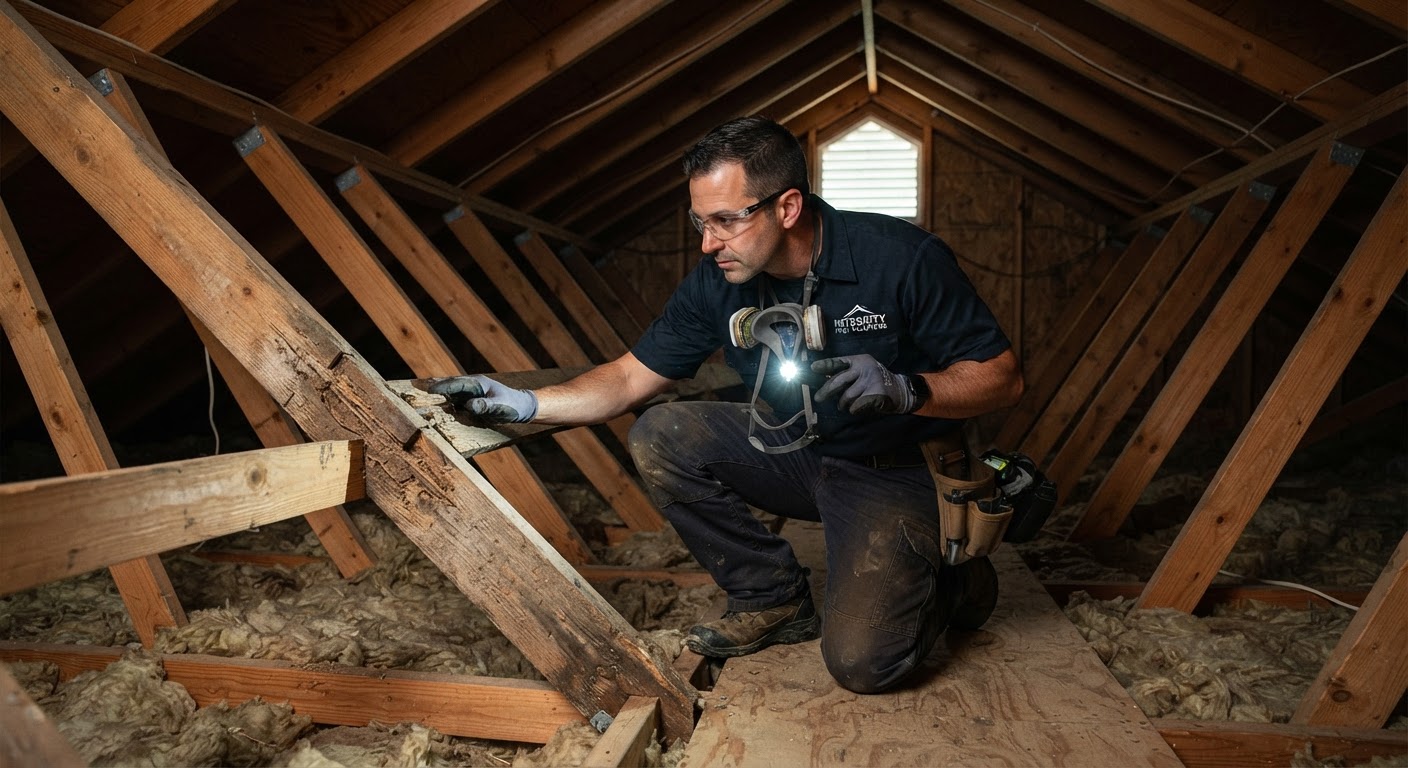
Because termite activity often remains concealed inside wall cavities, beneath crawlspaces, or high within attic framing, DIY inspection and treatment methods rarely provide lasting relief. A thorough, professional inspection by a qualified pest control specialist will accurately identify the specific termite species, locate the extent of the colony, and implement a targeted treatment plan to protect your home. Contact Morrow Pine Pest Control today to schedule an inspection and safeguard your property.
Need help from Morrow Pine Pest Control?
Contact our team to discuss your service needs in Los Angeles and surrounding service areas.